There used to be a saying in the piercing industry: "If I can pinch it, I can pierce it." And honestly? That's not technically wrong. But it is dangerously incomplete.
Yes, most things are pierceable in the most literal sense. But pierceable doesn't mean viable. It doesn't account for how your body is actually structured, how a piercing is going to heal, or what it's going to do six months down the line. And that distinction matters enormously.
What anatomy actually means for your piercing
Your anatomy is the way your body has naturally developed. The ridges of your ear, the depth of your cartilage, the amount of tissue between structures, the shape of your navel. All of it directly affects what piercings your body can support long-term.
This is why I do anatomy checks before all piercings, even ones that might not seem anatomy-dependent, because the truth is that all piercings are anatomy-dependent. My first job before any piercing is to look at what you're actually working with before we get excited about the jewellery.
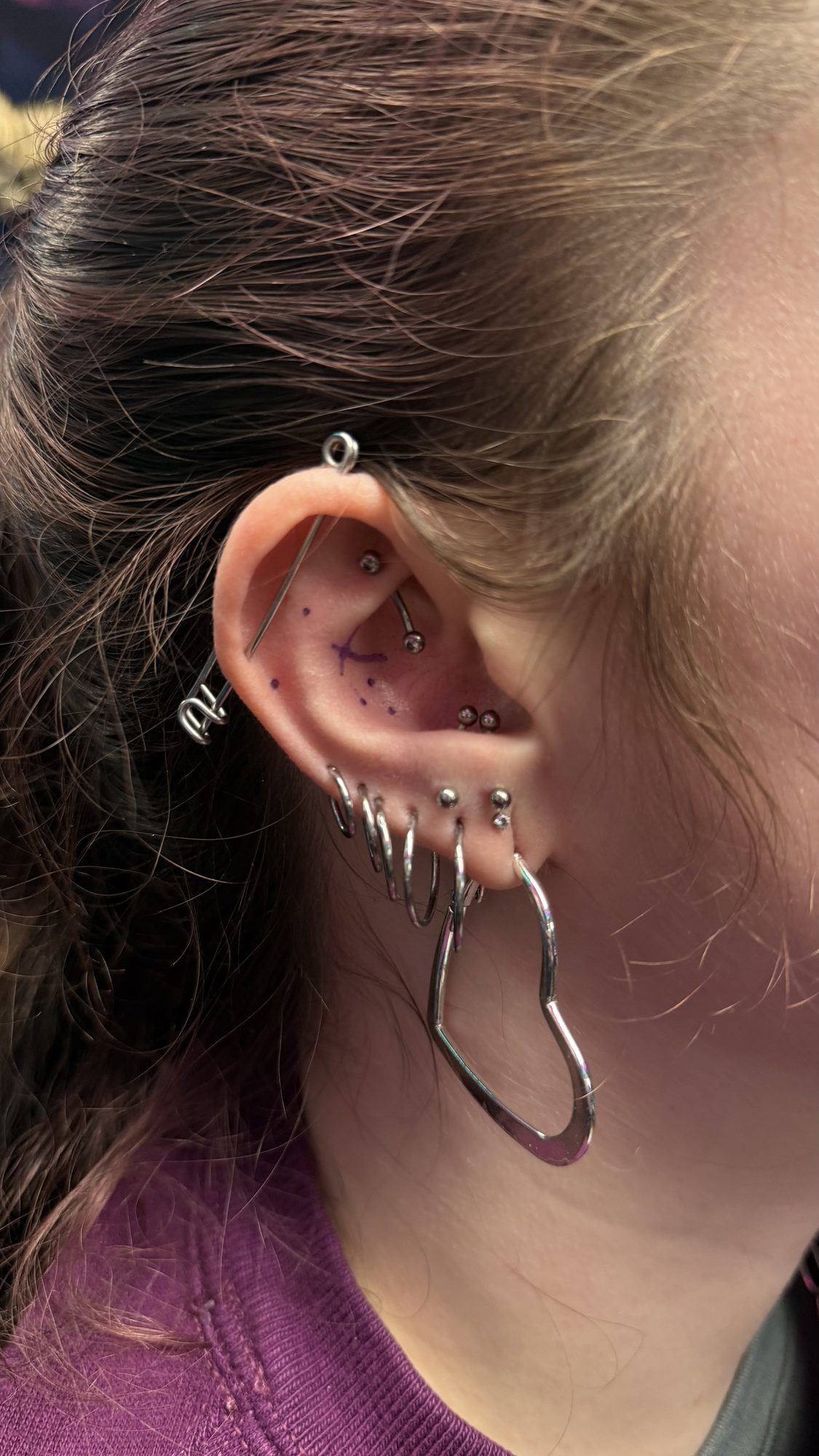
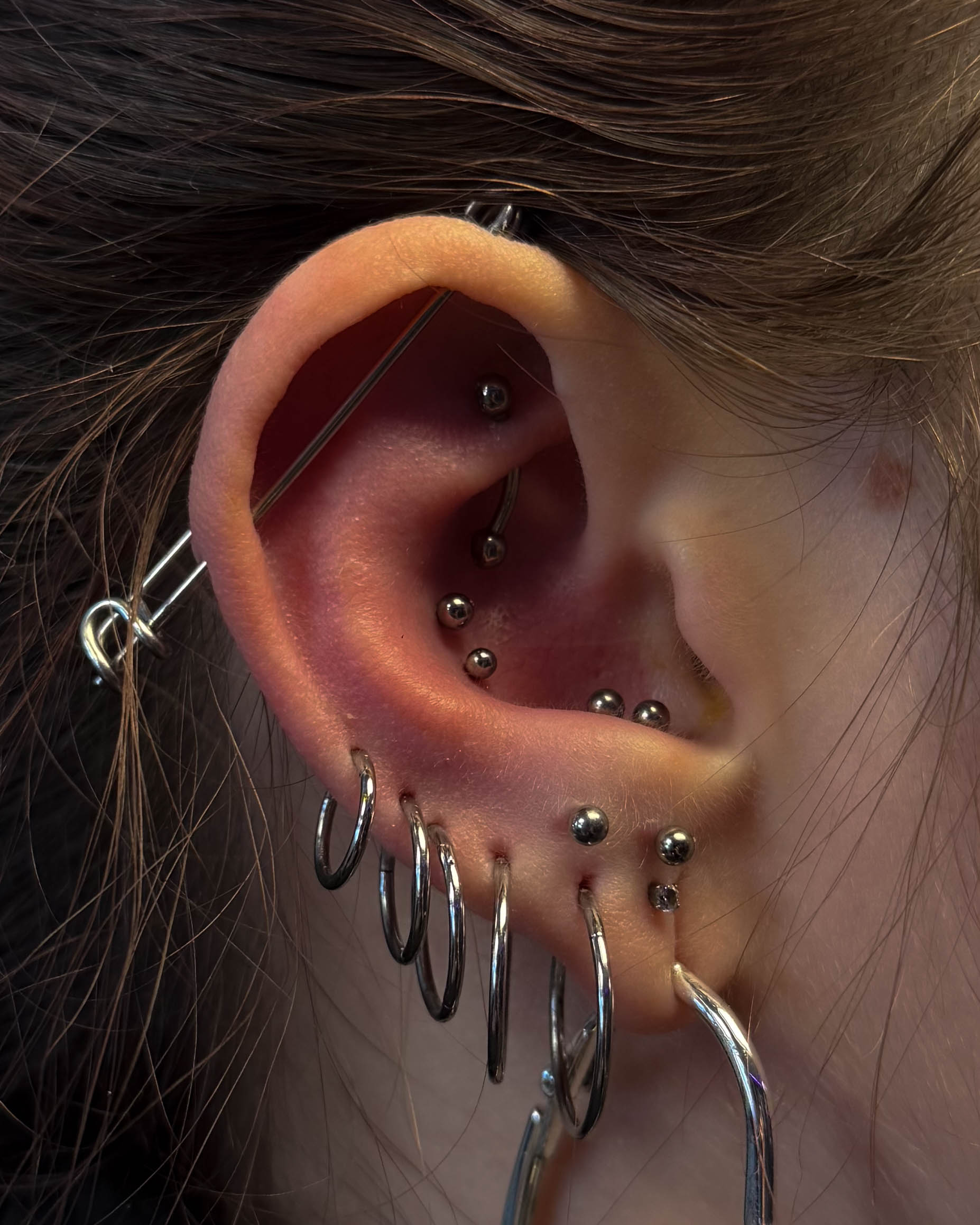
Left: a fuller titanium curation, built only where this client's anatomy could support it. Right: fresh piercings, placement checked before they were pierced.
A recent example: a client came in with a mid-helix piercing that just wouldn't heal. It had been causing pain and she'd eventually taken it out. Looking at the scarring and placement, I knew immediately why. There wasn't enough tissue between her contra cartilage and outer helix ridge. The angle required to avoid hitting cartilage created constant pressure. The anatomy wasn't there to support it. Somebody pierced it anyway.
That piercer wasn't necessarily bad. But they either didn't look closely enough, or they looked and pierced it anyway. Neither is acceptable.
The navel: the most common anatomy conversation I have
Navel piercings are one of the most popular piercings going and one of the most anatomy-dependent. A traditional navel piercing requires a specific structure: a shelf that holds whether you're standing, sitting or lying down, and that doesn't collapse when you move.
The navel area moves constantly. If the shelf collapses with movement, the piercing is being compressed and stretched all day. It will not heal. It will migrate, reject, or cause ongoing pain until it's removed.
We check your anatomy in multiple positions specifically looking at whether that shelf holds. When it doesn't, the industry has developed a brilliant solution.
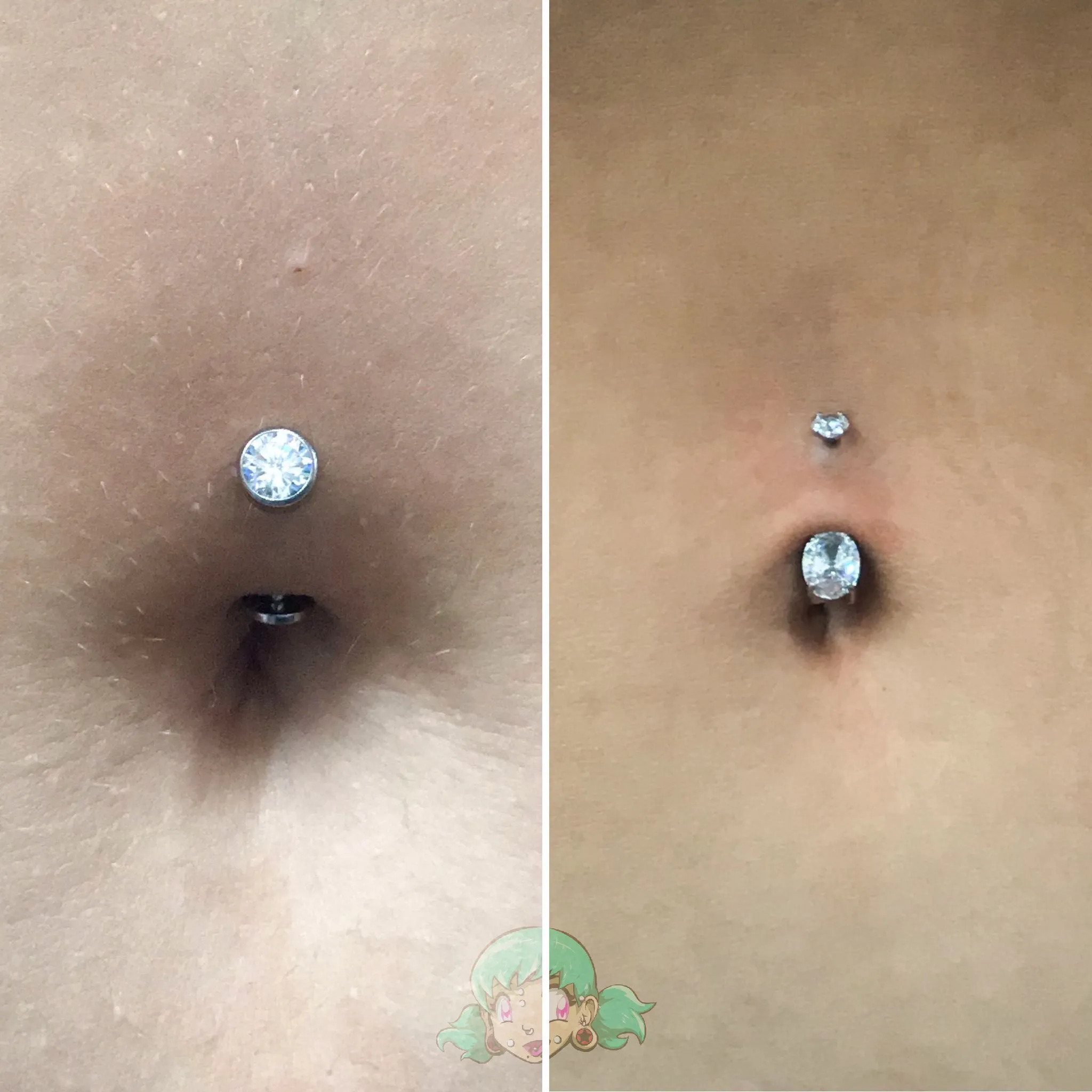
Left: a traditional navel piercing. Right: a floating navel, the solution when the anatomy doesn't support a traditional placement. Image credit: Sara Pierced Me @ Brilliance Bay.
The floating navel is a piece of jewellery set at a slightly different angle, without a bottom ball. It allows us to pierce anatomy that doesn't have a traditional shelf. It heals far more kindly on the anatomy it's designed for and opens up the piercing to people who would previously have been turned away.
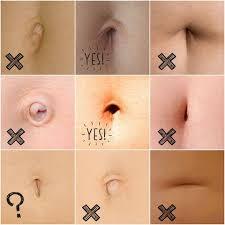
Image not owned by Stab Daddy Bri. Used for educational purposes only.
When the answer is no
If your piercer says no, listen. A piercer who turns you down for an anatomy reason cares more about your body than the booking. That's exactly who you want making permanent changes to you.
I will always try to find an alternative: a different placement, a different style of jewellery, a different approach. But I cannot alter your anatomy. There is no surgery that gives you a navel shelf if you don't have one.
Sometimes I'll refer you on because a placement is beyond my current experience rather than because it's impossible. That's not me saying I'm not good at what I do. It's me saying I would rather you get a second opinion from someone more experienced than have me attempt something I'm not confident in and leave you with a failed piercing and serious scarring. Your safety always comes before my ego.
Your anatomy is not a barrier. It's information. It tells us what we're working with and how to get it right.
When I assess your anatomy before agreeing to pierce, I'm not looking for reasons to say no. I'm looking for how to say yes in a way that's actually going to work for your body.
Not sure what you can get? Book a free anatomy check. No commitment, no pressure.
Book a free anatomy check