Aftercare is one of the most discussed topics online when it comes to piercings, and the industry is extremely opinionated about it. I am no exception.
Here's where I stand: the way we understand piercing aftercare has evolved, and that's a good thing. Some old school piercers push back on newer methods, arguing that if something worked back then, why fix what isn't broken. And to that I say: they used to think lobotomies treated autism. Medicine evolves. So should we.
If there is better information available that gives my clients a smoother, easier heal, I am going to use it. Full stop.
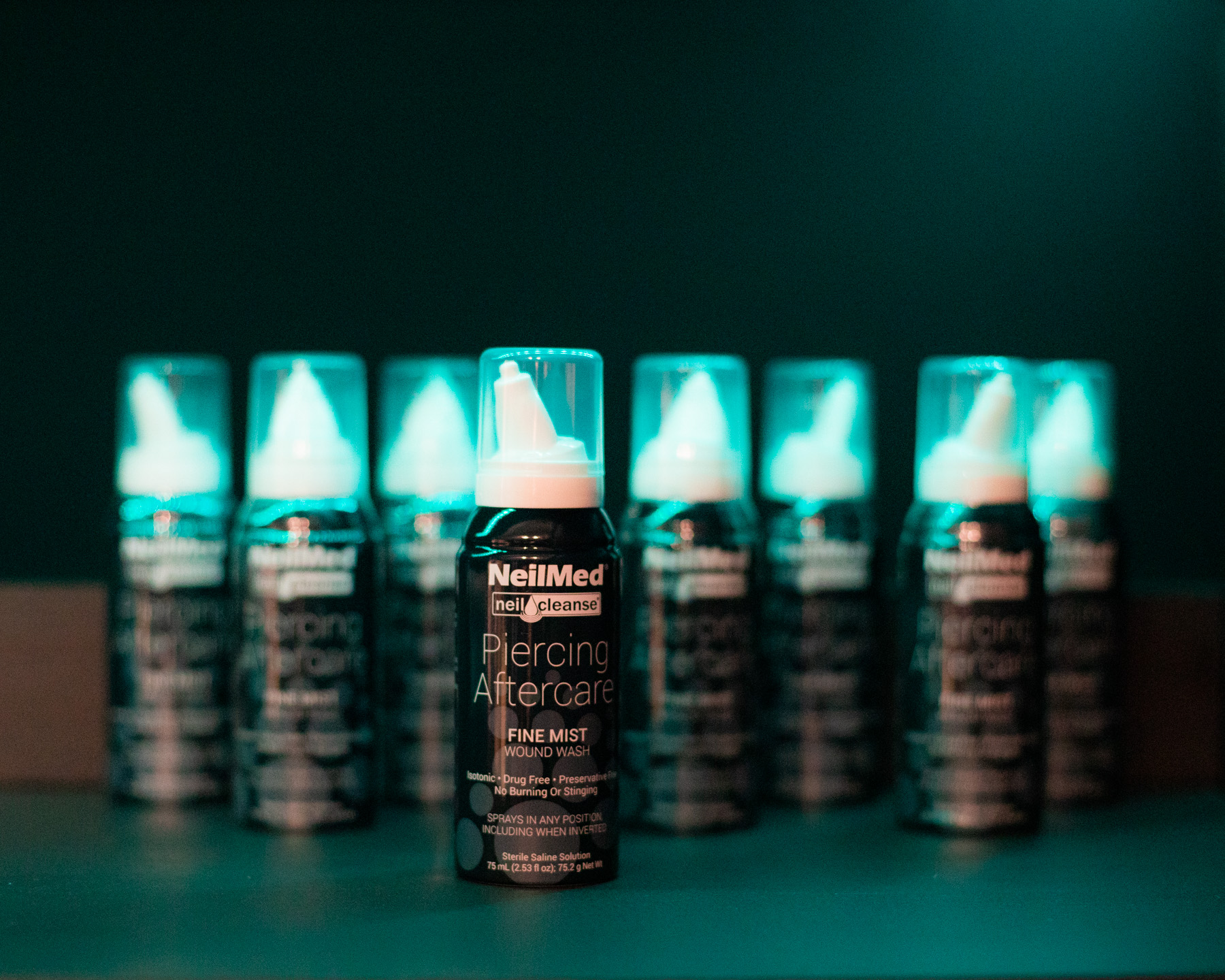
Why I use NeilMed
The ingredients in NeilMed Piercing Aftercare are pharmaceutical-grade water and sodium chloride. That's it. Salt has been used in wound healing throughout human history, with the earliest recorded use dating back to the Egyptians around 1600 BC, which I think is genuinely cool. There's a reason it has stood the test of time.
Regular saline from the chemist is not always sterile, and frequently contains preservatives that will irritate your piercing. Piercing aftercare sprays are formulated specifically for this purpose: sterile, preservative-free, and gentle.
I started using NeilMed personally in 2019 when I got my nostrils pierced. I had been pierced a lot as a teenager, was a devoted user of the old salt-dissolved-in-hot-water method (please don't do this), and I had never had a smoother heal in my life. I've not looked back since.
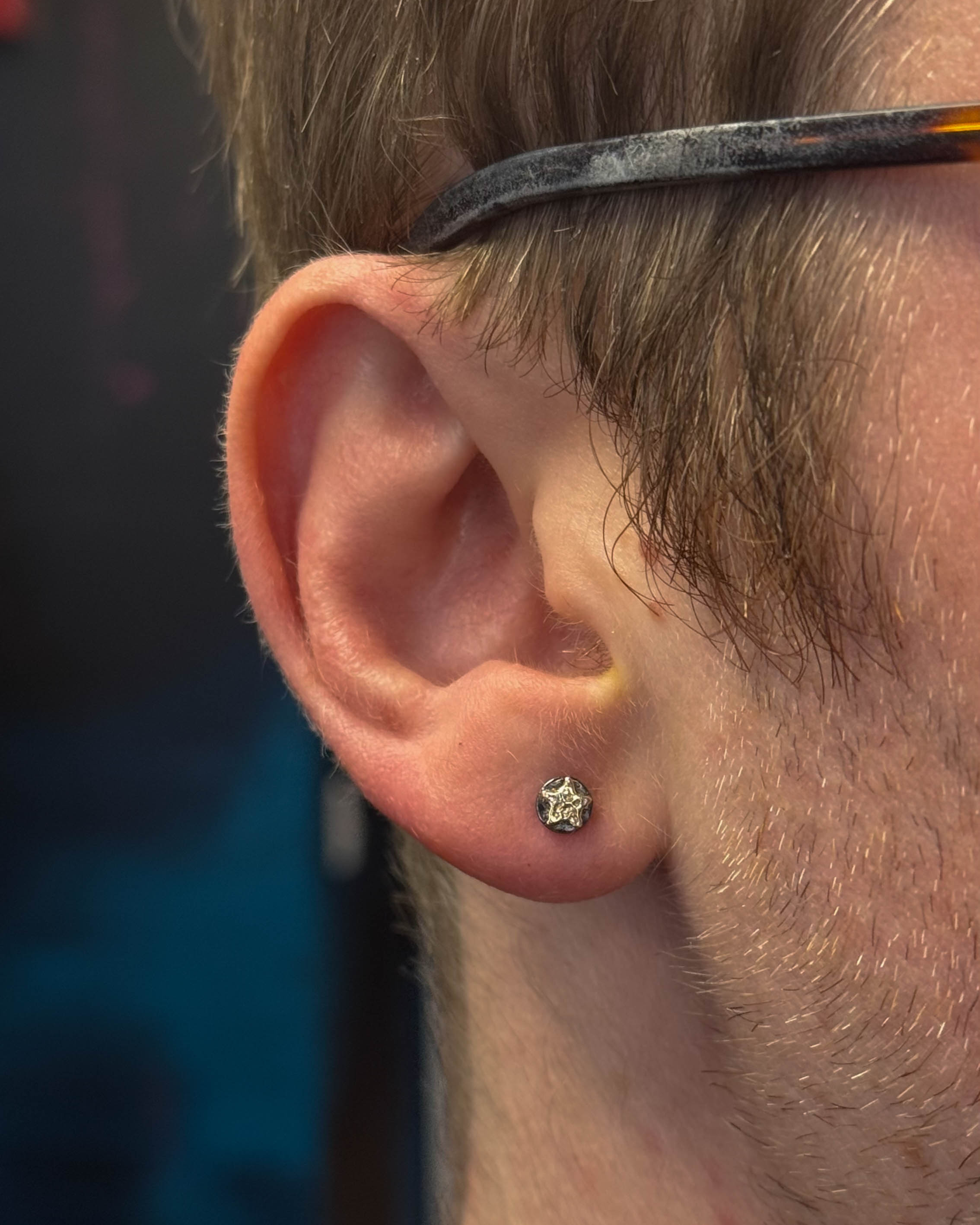
A freshly done lobe: this is what a happy, well-placed piercing looks like right after the appointment.
How to actually do your aftercare
Once or twice a day, ideally after you've showered. Spray a small amount of NeilMed into the bottle cap or a shot glass. Take a tightly wound cotton bud and dip it in. Clean the back of the piercing first, all the way around the jewellery. Then with a fresh piece, clean the front.
Then comes the most important step that most people skip: dry it. Thoroughly.
Leaving the piercing wet causes the tissue to absorb moisture and creates water retention pockets. This leads to irritation bumps that, while fixable, take time and patience to resolve. After every shower, dry your piercing. After swimming, dry your piercing. After any water contact at all, dry your piercing. Yes, this still applies to healed piercings.
If you have long hair, don't leave it down wet to dry over fresh piercings. Keep it away from the site while it's damp.
Everything else
No touching. Not by you, not by other people, not by children, not by pets. They mean well. They still need to not touch it.
No sleeping on it for the entire healing period. A travel neck pillow used sideways so your ear sits in the hole is the single most underrated thing in aftercare. Sleeping with pressure on a fresh piercing causes migration, irritation, and in serious cases the kind of damage that means retiring the piercing entirely.
No swimming in any body of water for at least six weeks. Pools, the sea, lakes, saunas. All of it. Showers only.
Don't change or remove your jewellery until we have assessed healing together. Cartilage piercings can feel completely fine on the outside while still healing internally. Changing too early is one of the most common ways a piercing goes wrong at the finish line.
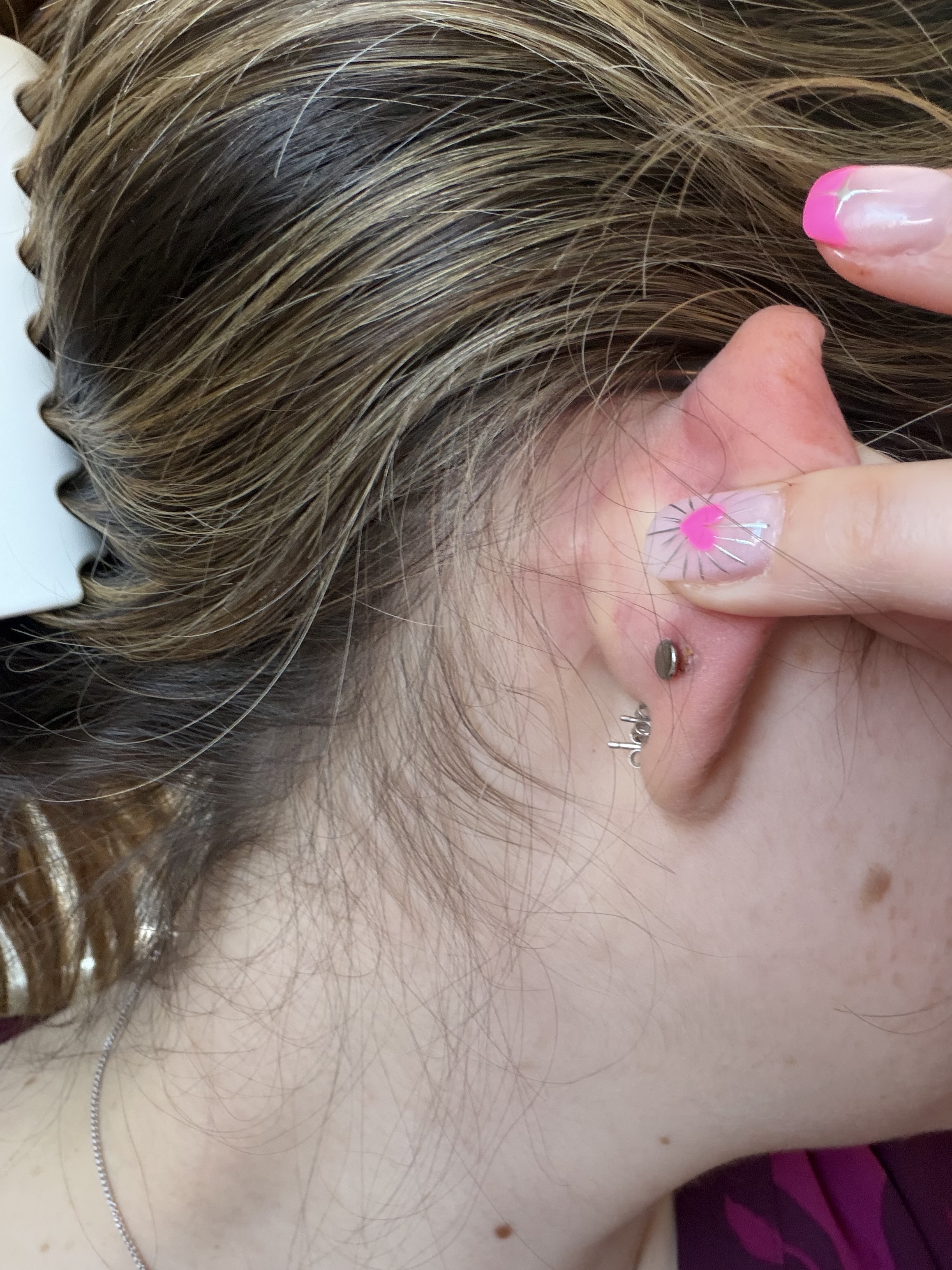
An irritated piercing: red, swollen, unhappy. This is usually fixable, but it requires coming in and getting it assessed. Not Googling it. Not taking it out. Coming in. (Image shared with client permission.)
Healing is not linear. It doesn't follow a schedule. Come to your check-ups and let me adjust as we go.
If something feels off, come to me first
Don't remove it, don't Google it, don't ask a Facebook group. Come in and let me look at it.
A professional piercer is going to have far more relevant knowledge than a GP when it comes to your piercing. And that's not a slight on doctors. It's just the reality that piercing isn't something they're taught. Doctors will, with the absolute best intentions, often tell you a piercing is infected when it isn't. A red, irritated, angry-looking piercing is usually just that: irritated. Infected piercings are far less common than people think, and jumping straight to antibiotics when they aren't needed is something we should all be trying to avoid.
Come to your piercer first. We know what we're looking at.
Questions about your healing? Come in for a check-up. Always worth it.
Book a check-up