So you've designed your dream ear. You have seven new placements mapped out, a collection of pieces you're obsessed with, and you want all of them immediately. I completely understand. I love the excitement and I am absolutely here for it.
But I care about you, your body, the healing of your piercings, and honestly your bank account. So let's talk about why slow is not just fine. It's actually the whole point.
Why I cap sessions at three piercings
I will do a maximum of three new piercings in one session, and four only in very rare cases with long-standing clients whose healing patterns I know well. This is not me being precious about it. This is me being honest about what we are actually doing.
Every piercing is a wound. We are creating a breach in your skin, placing a foreign object inside it, and asking your body to accept that and heal around it. Your body, very reasonably, does not love this. It will try to reject it, fight it, and remind you about it constantly. That's not failure. That's biology. And it's exactly why I want to give your body the best possible chance of winning that argument gracefully.
The more wounds we create at once, the harder your immune system has to work, and the higher the chance that one or more piercings is going to have a difficult time. Setting you up with seven fresh piercings at once is setting you up for a harder journey than you need. Why would I do that?
Healing is not linear
It doesn't follow a schedule. It doesn't care that the internet told you a helix takes six months. It doesn't care that your friend healed her daith in four. It is going to do what it does at the pace it chooses, and your job is to give it the best possible environment to do so.
No two people heal the same way. Some sail through with zero issues. Some have a smooth four months and then have an irritation bump appear because they changed their shampoo. Some take twice as long as average and that's completely normal. Come to your check-ups and let me adjust as we go.
Jennifer
She came with one piercing. What you see in the image above took multiple sessions and months of patience. Every session we added something, let things settle, assessed what was working, and kept going.
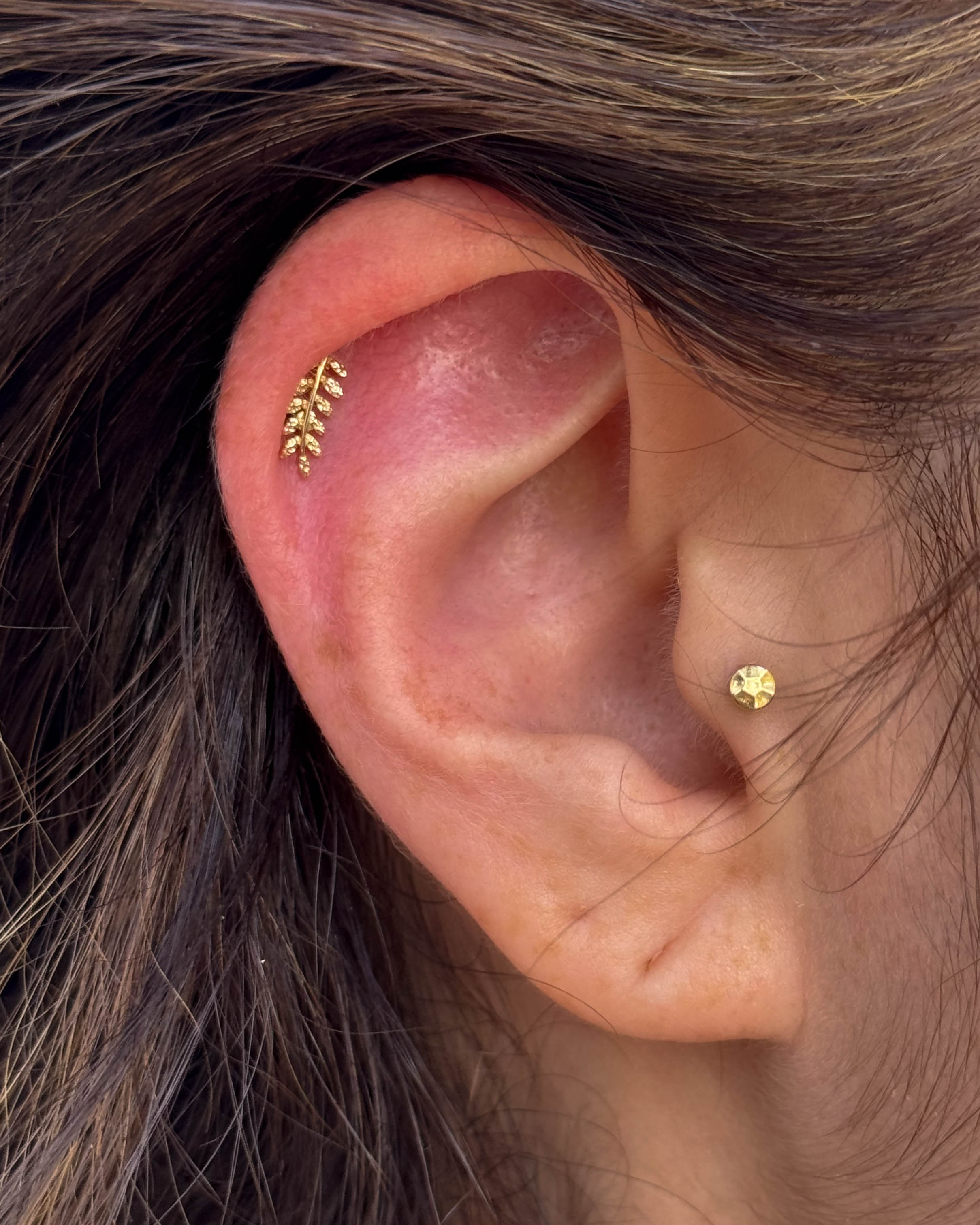 Session one
The beginning. First placements in, the design is locked.
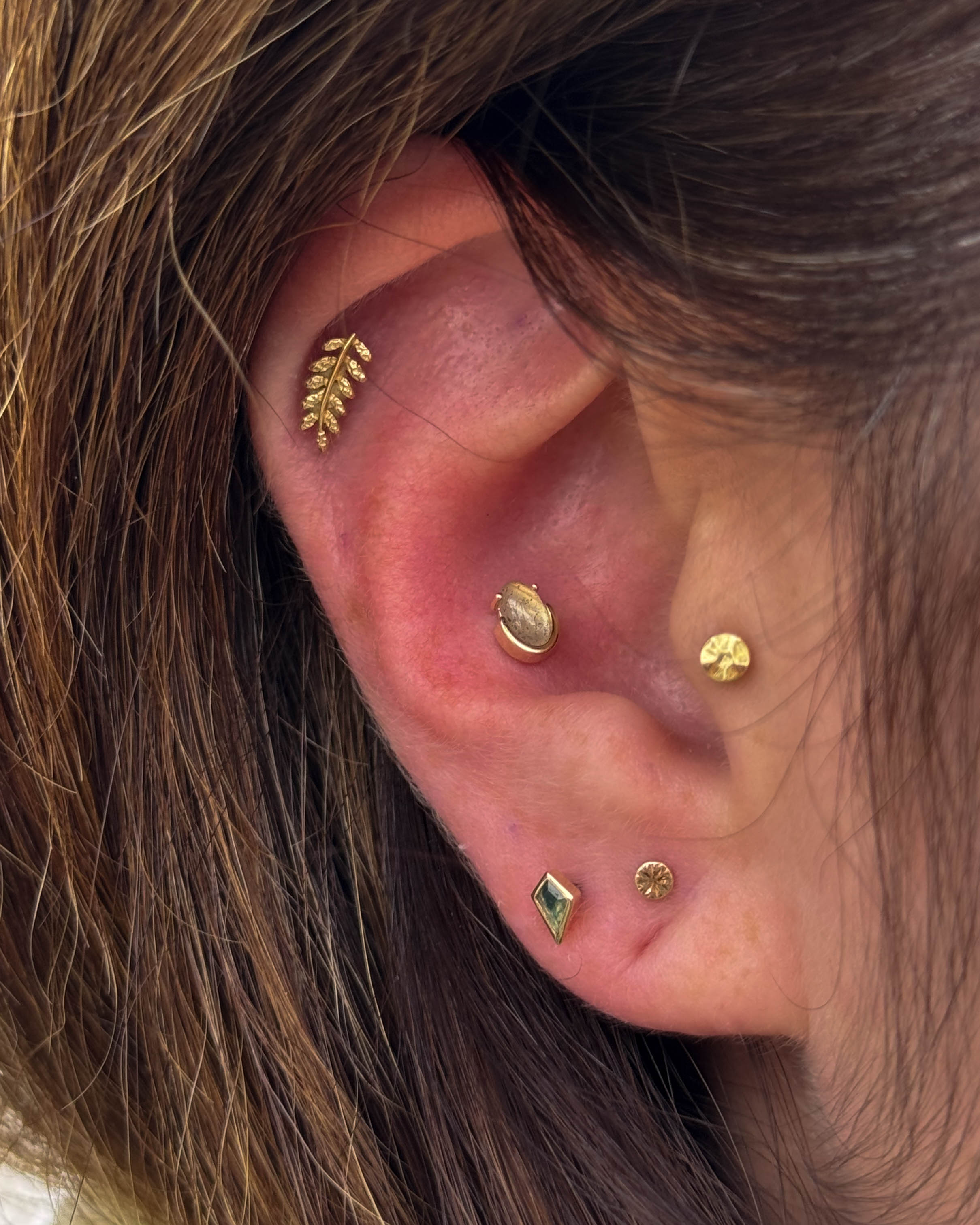 Session two
Previous piercings healing well, new ones added.
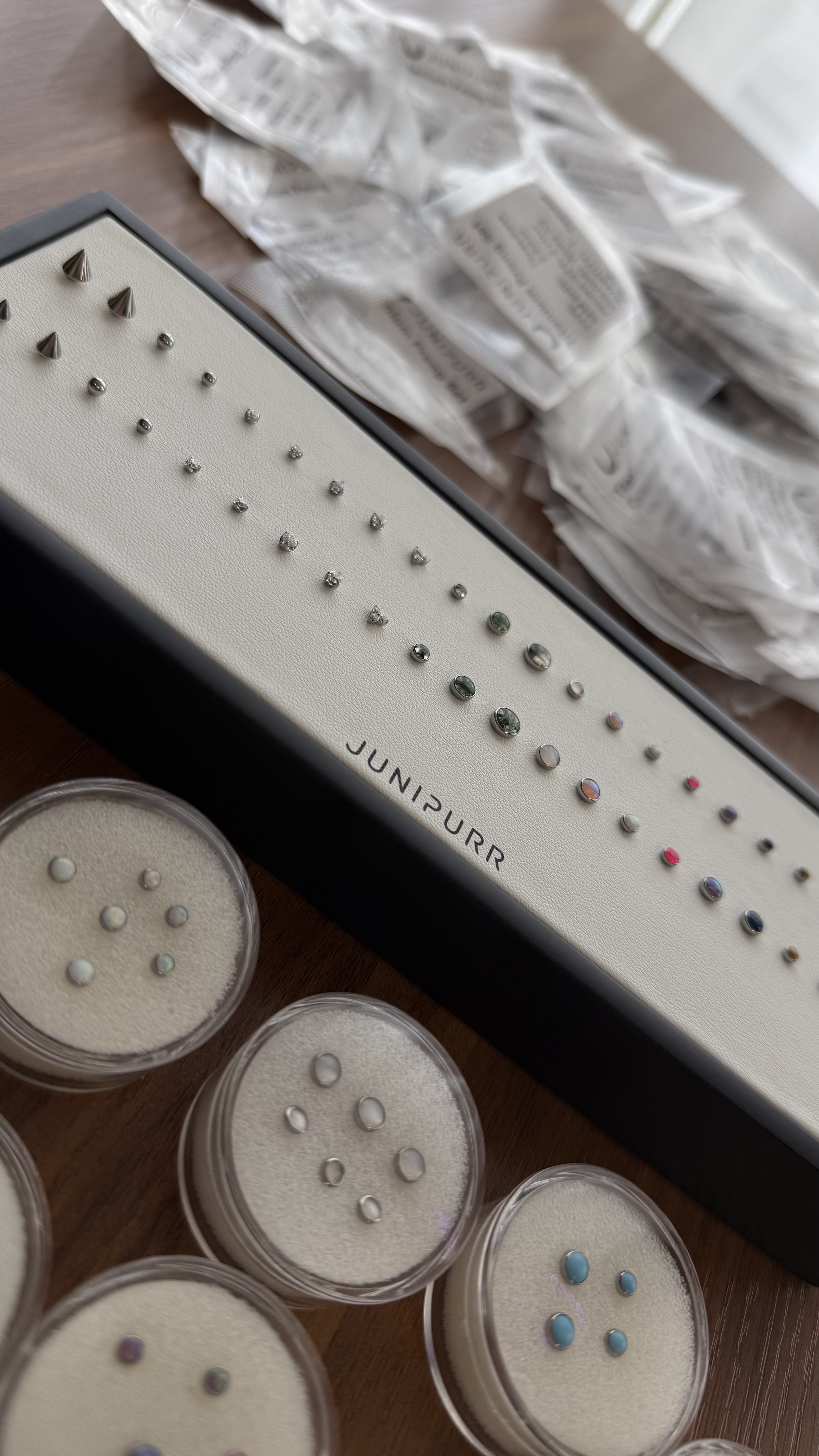 Session three
Nearly there. The vision is coming together.
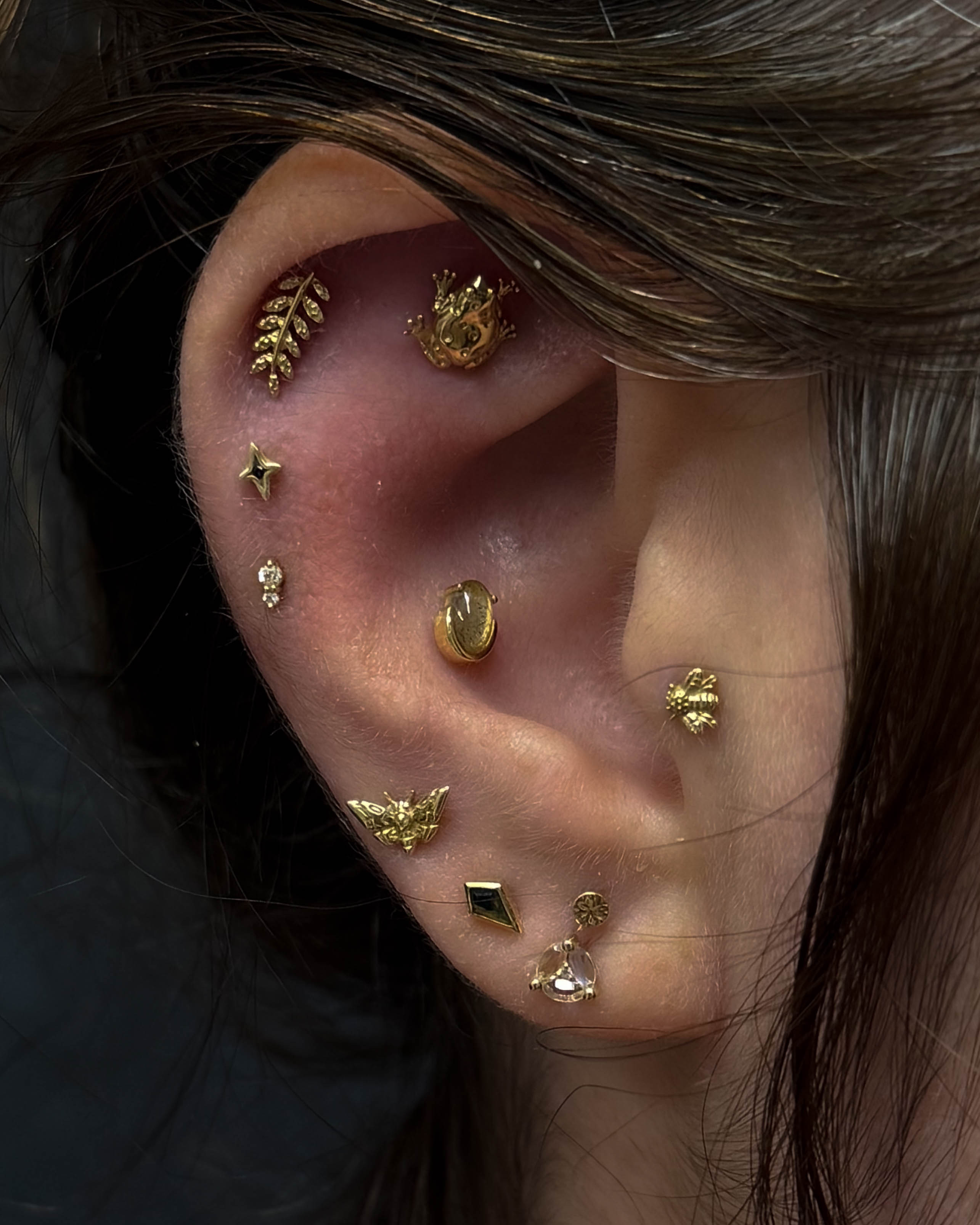 Fully healed ✦
The payoff. Worth every session, every check-up, every patient month.
It is one of my favourite curations I have ever done. Not because of what we added, but because of how we built it.
Things that affect your healing more than you'd think
Your medical history matters. Certain medications affect how your body heals, how long it takes, and how many complications you encounter. Tell me before we start.
If you're prone to keloids, this is an important conversation to have before any piercing. A quick note: only a doctor can diagnose a true keloid. A lot of what people call keloids are actually hypertrophic scarring, which is different and much more manageable.
And then there are gingers. You know who you are. In my experience, my ginger clients are simply built differently when it comes to piercings. They tend to bleed more during the process, swell more regardless of the time of year, and are more prone to irritation during summer months. I take extra precautions and adjust accordingly. It's not a problem. It's just something I factor in.
The lifestyle stuff matters too
Changing your shampoo, conditioner, face wash or laundry detergent during the healing period can have a real impact on how a piercing responds. If you come in with irritation and nothing else has changed, this is one of the first things I'll ask about.
Hair dye and treatments are a big one. I recommend a six to eight week window either side of a fresh ear piercing before dyeing or treating your hair. The chemicals involved are harsh enough to cause real irritation to a healing piercing even with careful application.
On buying pieces ahead of time
If you've fallen in love with a specific piece and you're not quite ready for the piercing yet, there is nothing stopping you buying it now. Either keep it at home or leave it in the studio until you're ready.
The only time I'd actively encourage buying ahead is if it's a limited edition piece. The piercing community, myself very much included, is essentially a collection of magpies and small dragons guarding beautiful shiny things. Popular pieces sell out fast and are sometimes discontinued. If something calls to you and I have a feeling it's going to fly, I'll tell you.
What you're building is something that's going to live on your body for the rest of your life. It deserves patience.
Slow is not a compromise
It can feel frustrating to take it one or two at a time when your vision is seven piercings deep. But the curations I am proudest of were never rushed. They were considered. Piece by piece, session by session, until the ear became exactly what it was always supposed to be.
That's the whole point of a curation. Not fast. Just right.
Ready to start your journey? Book a design session and let's figure out where your ears want to go.
Book a design session